















A recurring feature where we analyse the latest Number One single in Australia so you don't have to.
--
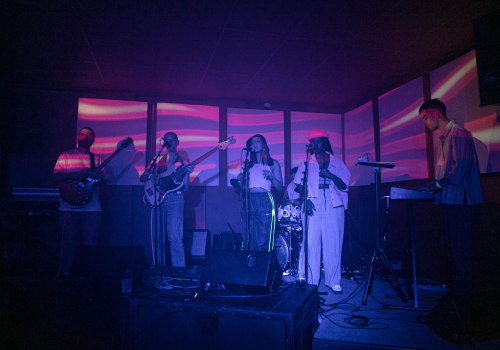
'Somebody That I Used To Know '
Gotye (feat. Kimbra)
(Eleven)
Gotye - 'Somebody That I Used To Know'
The new number one this week? 'Somebody That I Used To Know' by Gotye (aka Wally De Backer, aka —according to his website—"Gore-ti-yeah"). It replaces
Adele's 'Someone Like You' at number one, after seven weeks of heartfelt piano balladry. Not only is it Gotye's first number one, but it's also his first song to trouble the singles charts at all -- surprisingly, considering his seemingly omnipresent 2006 track
'Hearts A Mess' (though it does have over a million views on YouTube). It’s also Kimbra’s first time on the Australian singles charts (she’s the New Zealand-born singer who guests on the third verse of the song). Gotye is the first Aussie to be at the top of the charts since
Guy Sebastian’s ‘Who’s That Girl’ in January this year, and I suspect that Kimbra’s the first Kiwi to get to the top of the Australian charts since OMC’s ‘How Bizarre’ in 1996. (UPDATE: As a commenter pointed out, the last Kiwi act to reach Number One in Australia was actually
Evermore's 'Light Surrounding You' in 2006.)
For three or four years now, the songs at the top of the charts have been all about the mythical "club" — think
LMFAO’s 'Party Rock Anthem' or
'Who's That Girl' (or
this song or
that song or…). Number one song after number one song has had danceable “four to the floor” disco beat and banal lyrics about mindless hedonism. These songs have a pretty obvious place and purpose – a) the dance floor, and b) making people feel good about their mindless hedonism. (And though they've been momentarily banished from the top spot, one very much doubts they’re going away any time soon.) And so the fact that Gotye's ‘Somebody That I Used To Know’ is at #1 in Australia this week, really does suggest some bizarro alternate world where the general public connects with thoughtful, "arty" music. Or more to the point,
purchases it.
‘Somebody That I Used To Know’ hinges on the fallout from a failed relationship. It is a song that is very obviously not about how everyone is going to have a good time tonight. The found sound percussion barely lives in the same universe as the plastic thump of say, ‘Party Rock Anthem’; the engine room of the song is not electro drums but an acoustic guitar part— very reminiscent of the intro to XTC’s ‘Senses Working Overtime’ (see below). There's no (audible) autotune. It doesn’t have that professional Dr Luke/David Guetta synth sheen. You don't hear the main hook until two minutes into the song. It’s not obvious dance floor filler. (There is however at least one similarity between the clip for ‘Somebody That I Used To Know’ and the usual chart pop song; Gotye - like many a pop starlet - isn’t wearing very much in the song’s oddly compelling video.)
Most of the time, number one singles take inspiration from other songs on the charts. LMFAO’s ‘Party Rock Anthem’, for example, distinctly sounds patterned on the Black Eyed Peas, while recent singles by Ke$ha and Katy Perry would probably sound quite different were it not for Lady Gaga's influence. And while 'Somebody That I Used To Know' isn’t exactly a dissonant drone piece, and does have echoes of other music here and there (
The Books’ Thought For Food',
Iron & Wine’s The Shepherd’s Dog'), it certainly doesn’t sound like anything else on the charts. The only real comparison point that most of the people who bought the song might have is De Backer's prior hit, 'Hearts A Mess'. But where the sound of 'Hearts A Mess' more obviously reflected trip-hop — with its paranoid echoes of jazz and soul — 'Somebody That I Used To Know’ ditches the swing beat, jazzy organ and the orchestral flourishes of the genre, for a leaner, bare percussive sound. What the two songs
do share – what Gotye has retained from the older song – is the tracks internal logic. Both songs are unhurried, with mid-tempo BPM; both swing between emotional poles. And both are about emotional longing and distress.
This shifting between different emotions - and the tension it creates - is something Gotye does very well. As is being able to convey such intensely personal emotions in a simple, broad language that resonates with the masses. Furthermore, both ‘Hearts A Mess’ and ‘Somebody That I Used To Know’ oscillate between (a certain kind of) sadness and (a certain kind of) anger. Now sadness and anger aren’t unrelated emotions – it’s easy to cycle between the two. After all, both anger and sadness are very often based on frustration and regret. But where sadness comes from a sense that we cannot change things — that what is done is done — anger is a more active, anxious emotion. An angry person reacts to a situation – HULK SMASH! – where a sad person mourns and ruminates on what could have been. And we can never quite tell, a lot of the time, whether a situation
can be changed. So there's a tension in not knowing whether we feel sad or angry. And what — if anything — can be done about it. In times of emotional upheaval, we will forever move between the two states. Entire careers have been based on less.
Gotye conveys much of this upheaval and confusion with his vocals alone, artfully emphasising just such emotional poles. His voice in the verse is very 'dry', as if recorded in a closet. In the chorus, however, "emotions" explode, as Gotye's voice soars to sing about how the object of his (ex-)affection got her friends to collect her records and changed her number. His more forceful vocals put a rasp in his voice, making him scan as a big, bombastic '80s pop singer like
Sting or
Steve Winwood; he double-tracks his vocals, singing the same part twice to make it sound full. Instead of the dry closet sound, it now sounds like he’s singing in a hall, somewhere big enough to contain his quickly spilling emotions. All of which makes the chorus hit harder—seem bigger, angrier than the meek, muted tones of the verses.
But the point where the songcraft really becomes special, is the introduction of Kimbra. Up until she starts singing the third verse, De Backer's male character scans as self-centred and searching; lost in his own emotions. He talks about how he
"felt so lonely in her company", and is glad the relationship is over, before the chorus unleashes his anger at their split. There’s little consideration for the object of his hurt, or why they might have failed to connect. He suggests it's her fault. Kimbra then, returns the salvo; playing the part of the now-missing-in-action ex returning to have her say.
Kimbra's character enters the scene with
"Now and then I think about all the times you screwed me over / but made me think that it was something I had done", abruptly shifting the complexion of the song. To this point Gotye had us believing he was the victim. But it’s difficult now — armed with this new information — to blame Kimbra’s character for repelling this emotionally manipulative lover. And thus it becomes clear that both are unreliable narrators, the two singers singing from the perspective of hurt characters — complex humans regressed to raw emotions. Here then, the
Mellotron flute sound enters the mix while Kimbra sings, showing a subtle indication that Gotye (the producer/writer) intends for you to feel Kimbra’s side of the argument is perhaps correct—or at least, of brooding significance; the Mellotron has a breathy, airy sound with nostalgic overtones, and it’s a stark contrast to the rest of the percussive instruments in the song – xylophones, guitar strings and percussion – which all sound like they’ve been hit or plucked. To hear that breath of air during her verse, and nowhere else, makes her points sound soothing, more reasonable.
Kimbra’s verse builds to the emotional peak of the song. Halfway through her short section, a static, one note bass line enters the mix, which alters the landscape of the song once more, ratcheting up the tension again. As it builds, the sound of Kimbra's voice changes, becomes harsher and angrier; until the music pauses, and she belts out — unexpectedly — the chorus hook. But it's a stooge — the real climax is when Gotye re-enters the frame, cutting off Kimbra’s verse by singing "you didn't have to cut me off". In re-addressing the issue in real time during the song, the duo are cleverly replaying the same conflicts that split them apart in the first place. And though he's singing the same lyrics as in the previous chorus, the emotional heft is now different. In the first chorus, the listener gives the male character benefit of the doubt about his feeling aggrieved that he’s no longer friends with his ex; here, after hearing her side of the story, his complaints sound hollow; we have pity for him rather than empathy. And in this narrative use — these dueling narrators — Gotye (the artist) has achieved a high-watermark in his pop song-making; he allows the listener to feel like they're deducing the story for themselves.
(Continued next page)