



Keen-eyed photographer Daniel Boud has been thrusting his camera into Sydney’s creative scene for a few years now, most recently for Time Out Sydney, but it’s his shots of local and international musos that has cemented his position as one of the finest young photographers in the country. With his commitment to the craft it’s no surprise that Boud has developed a knack for capturing big moments onstage and off. We chatted to him last week, as Sydney recovered from a very photogenic dust storm, about watching the music scene through the lens.


Get any good shots of post-apocalyptic Sydney this morning?

I did – as soon as I woke up and saw that red sky I actually leapt out of bed and went down to Sydney Harbour and took a few snaps.

It’s a compulsion for you, isn’t it?

I bought a digital camera probably six or seven years ago and just became obsessed with it. I just took it everywhere and snapped everything. I snapped my friends going out. It’s weird: the more I do it for work the less obsessed I am. But that’s how I got into it in the first instance.

But it doesn’t pre-date your love of music – you married those two together late on.

Yeah that’s right. Music’s a long-time love. When I became obsessed with photography, I’d been going to heaps of gigs, and when I started getting into photography I started taking my camera to these shows and taking pictures. I was also a bit of a web geek as well so I put my pictures online afterwards. It was a marriage of these three obsessions in life: the music, the photography and online.

How do you progress from taking a few snaps to doing it for a living?

I created this blog, Boudist.com, and I would just put my pictures up there for the love of it. My first proper gig was for one of the street press publications. They saw my pictures and said, You’re going out to gigs and shooting people anyway, why don’t you take some pictures for us? That was my first proper gig. It didn’t turn into a proper job until a couple of years ago when this new magazine in Sydney called Time Out was starting out. They could see I was already shooting Sydney’s creative scene and they asked me to come along full time as their chief photographer.

SLRs are relatively easier to come by, Twitter and iPhones have perhaps changed the way we consume photography. Has this changed anything for you?

I’ve certainly noticed a big change. When I started my website, and I wasn’t really aware of what I was doing, I was posting a lot of party photos, I’d go out every weekend and shoot me and my friends getting drunk and post it up on the website. And that was before the era of those party photos websites like lastnightsparty. I’d go to a live show at the Annandale and I was probably the only one there taking pictures. But now if you go to Annandale, the Oxford Arts Factory or Spectrum there are a dozen people there with SLRs, all as good as mine, shooting pictures and putting them on their blogs and online mags and that kind of thing.

Does that make for camaraderie or rivalry, or both?

It’s weird. There’s definitely a camaraderie amongst people that I know, there are a lot of Sydney bloggers I’ve come to know, and if I come to a show and I’m shooting in the photo pit, I’ll probably know all the photographers there. We’re all very chummy. But when I go to a show now at a venue and there’s a dozen or more photographer and I don’t know any of them, it’s weird. I feel intimidated. I feel I don’t want to be a part of this, this weird scene, which has almost become like a paparazzi scene. I just want to put my camera down and enjoy it. So it kind of puts me off when there’s so many photographers because I don’t want to be part of that fray.

This idea of wanting to put your camera down is interesting – do you ever feel you’re missing out on something, experiencing it through your lens in your special area at the front of the stage?

I’ve been asked that before, especially when I was more obsessed with it and was shooting absolutely everything in my life. To be honest, when I’m at a gig, in the photo pit at the front of the stage I feel like I’m experiencing it more than anyone in the crowd because I’ve got literally the best spot in the house at the performer’s footsteps. If it’s a band I love I’ll sing along to myself and do it with absolute glee. I don’t feel like I’m missing out, if anything it I feel I’m experiencing it in a more heightened state.

From that vantage point, do you think you’ve learnt anything about musicians? From getting so up close and personal with them?

I’ve come to appreciate acts that understand that when you step on a stage you have to perform. I get really bored and frustrated with bands that think they’re musicians and not performers. When you step on that stage your job is to perform for the crowd. I really appreciate artists who really amp up their personalities for the stage and try to engage the crowd, who realise that it’s a visual medium and not just an aural medium. I have come to really love acts that are flamboyant on stage. There are a lot of acts that I would love to see perform even though they’re not really my kettle of fish to listen to.

Music writers have to wrestle with this notion that writing about music is like ‘dancing about architecture’ – the idea you can’t really express an experience of music, which is so intangible, in mere words. How do you go about expressing an experience of music in a picture? Or gallery of pictures?

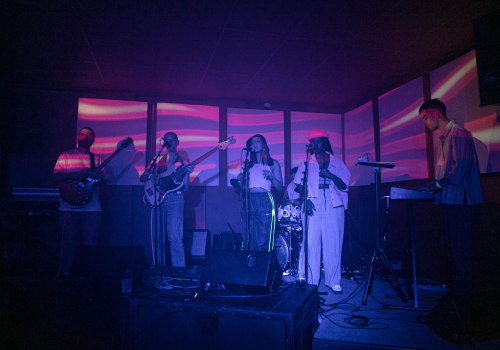
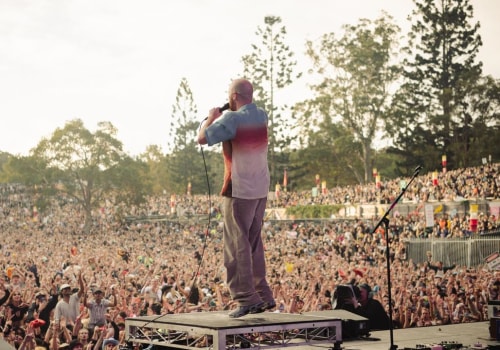
I guess you’re always after the emotion. When the singer is singing that high note and absolutely belting their heart out, or when the guitarist is playing a solo and waving his guitar out in front of the crowd, or when a performer leaps off the stage and into the crowd. You try to snap those moments of the heightened the most intense part of the show. The guitarist standing there looking at his feet playing his guitar isn’t interesting at all.

How does concert photography compare to studio photography which you’re doing more of these days?

It’s extremely different. At a concert, everything’s presented for you. You can’t control the acts. You just have to shoot what you’re given. In a studio, it’s a completely blank canvas, you control the light, you can direct the subject, you can choose the venue, you can change absolutely everything. It’s a lot more difficult but ultimately more satisfying, because it’s much more your vision rather than capturing something that’s presented for you.

Does that mean that sometimes it can go wrong?

I can’t say that I’ve had any massive disasters but musicians are often quite uncomfortable having their picture taken. When they’re on stage they kind of revel in that, they realise that’s their home and they’ll be really boisterous and flamboyant. But if you get them off stage and you’re in a studio with them – and it’s just me and a couple of people staring at them – they can become really camera-shy and feel quite intimidated by the process. Part of the photographer’s job is to make the artist feel comfortable and let their personality come out and not feel too self-conscious about this weird situation.

Any particularly memorable moments?

I always get excited when I get to shoot people who I’ve idolised. Someone like Henry Rollins, I was leading up to it thinking, 'Holy shit, I’m going to meet Henry Rollins and I have to tell him what to do'. That’s exciting. I grew up being a huge U2 fan so when I finally got to shoot U2, it was just live shots, but that was a fairly exciting moment for me. And shooting Iggy Pop when he was out here – he’s just a phenomenal live performer and he looks incredible. It’s shooting those icons for me that makes me pinch myself.

Would you like to get into album covers?

Yeah definitely. I’ve done a couple of album covers, they were kind of unplanned. I did a shot for Bluejuice for their first album, not knowing it was going to be the album cover at the time. But yeah, album covers are definitely awesome to have, because it’s part of history. And it’s the one image that has to sum up a record. If you can nail a frame that’s good enough for an album cover, you’ve really done a good job.

What do you think of formal photography training as opposed to learning your craft by youself?

As you know I’ve not had proper formal training. When I got my full-time job at the magazine I suddenly realised I’ve never ever done any training in photographer. It was only once I became a full-time photographer that I enrolled in this course to make sure I wasn’t doing things absolutely wrong. I think the best way is to just take as many photos as you can, as often as you can, in as many different environments as you can, and learn from that.

I think another important thing is sharing those photos. I’ve always taken photos and put them online. I can see what people like, I can see what photos weren’t so successful. There’s more of a learning process involved when you’re forced to share your work. If you just take pictures and they just sit on your hard drive you won’t learn as much from the process as much as if you have to share those photos with the world and get that critique back.

I read that you’ve said the process of taking a photo isn’t complete until you’ve put it up online.

I find that online there’s quite a good community of photographers, especially on sites like Flickr, photo blogs and even to some extent Facebook – it’s just nice being able to show your pictures to other people and have them see and kind of experience what you experience. It’s nice to know that people are watching and enjoying what you do.

Where to from here? What have you left to achieve as a photographer?

That’s a good question, I wish I knew. My whole career up to this point has been unplanned. I’ve just kind of rolled with it. I never intended to become a photographer. It was just a very happy accident. I just want to keep getting better and better and better. I feel like I’m at a very early stage as a photographer, I’ve got a lot to learn. I just want to keep honing my craft, as they say.

To see more of Daniel’s work visit www.boudist.com stat.

Darryn King