
Good Vibrations
Gold Coast Parklands, Gold Coast
Saturday 19 February 2011
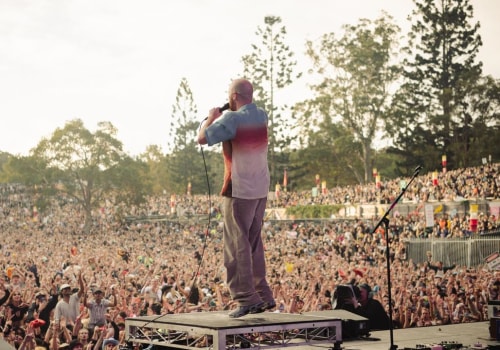
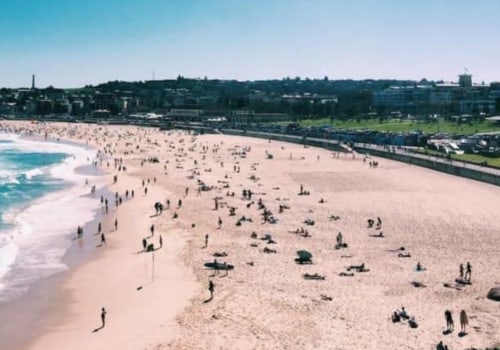
On show day, wide open spaces are among the last things that festival promoters want to see. So Jam Music, the team behind Good Vibrations, must be pretty bummed by this year’s turnout. Half price tickets were offered to the Sydney show, and there were reports of lacklustre attendance in Melbourne and - to a lesser extent - Sydney, while punters at the Gold Coast leg were informed a few days prior that they could bring a friend to the show for free. One can't help but wonder just how bare the venue would be, were it not for that last minute face-saving decision; even now, there’s loads of unused space within the Parklands.
Despite running a similar amount of stages to the Big Day Out, the Good Vibes grounds take up perhaps half of the floor space. In recent years, promoters have attempted to distinguish the festival from myriad other doof-fests by booking indie pop and rock acts high up the bill. Evidently, their efforts this year weren't enough to stand out from a crowded summer schedule. By moving away from the dancefloor in search of the moshpit, Good Vibrations may have lost its core audience.
I am not part of this festival’s core audience. When the first line-up announcement was made back in September last year, two of my most anticipated artists were Cee-Lo Green and Janelle Monae. Both ultimately cancelled in favour of staying Stateside and performing at the 53rd annual Grammy Awards, meaning that some large holes suddenly emerged among the line-up. And so the first artist of real interest isn't until half three on a disgustingly hot Saturday afternoon. (Although curiously, the $40 festival shirts for sale behind the merch desk still list the names of both Monáe and Green. The perils of printing merchandise months in advance.)
Erykah Badu is a thing of beauty. At the outset, I'm a bit sceptical, due largely to the circumstance in which she takes the stage. For over five minutes, her band are put in a holding pattern playing the same eight bars; a dark jacket is handed to the bassist, whose white check shirt stands out among his fellow black clad musicians. I expect a diva-like performance, fraught with perfectionism and divorced from spontaneity. Thankfully, my doubts are disproven around 10 minutes in, as the American singer smiles for the first time and reveals herself to be wholly engaged with the wide crowd of admirers. "You know why I do this?" she asks us halfway through. "I do this for my sanity."
Thank fuck that she does. Her hour-plus on stage is a thrilling ride through her eclectic catalogue of soul and R&B stunners. With a wave of her hand, she cuts her band off on the beat time and again; by constantly deconstructing and rebuilding her songs, Badu ensures that she remains the focal point. Indeed, it is impossible to take one’s eyes off the singer, so alluring is her voice and presence. When she walks the length of the front-of-stage barrier toward set’s end, while still singing and holding onto the crowd for support, there’s little doubt that any of us would let such a beautiful creature come to harm. From 1997's Baduizm to last year’s New Amerykah Part Two (Return of the Ankh), it's a wide ranging and powerfully-delivered set. Massive props to the Good Vibrations bookers for bringing her out to Australia for the first time. It’s good enough to take us away from the fact that, under the stifling dark canopy of the Roots Stage, it's so hot that our bodies constantly ooze sweat, even while stationary. It also sets a very high bar for the rest of today's acts.
Badu is so mind-blowing that I temporarily forget that I’d planned to see Friendly Fires on the main stage immediately afterwards. Instead, in a daze, my offsider and I head into the Nokia Dance-Off tent in search of free slushies, after we’d spied several empty cups among the festival detritus. It turns out that, before you’re allowed your choice of free slushie from a rainbow of flavours, you must first allow a Nokia spray-on tattoo to be applied to your skin. This is fine; they rub off immediately afterwards, and the slushie is appreciated. Inside the tent, people are crowded around dancers attempting to win mobile phones by busting their moves, or something similar. Nokia staff film the action on the company’s latest phone, which is broadcast to walled televisions. Though the branding is overt, they’re clearly doing a decent job of engaging festivalgoers, as I don’t see the tent empty all day. By this time, Friendly Fires are right at the end of their set; as we walk toward the main stage, the closing bars of ‘Kiss Of Life’ nearly floor us through sheer volume. This is because some bright spark had the idea of doubling up on speaker stacks; besides those attached to the stage, there are also speakers set up around 70 metres back. At no point during the day does the crowd swell back this far. To call it overkill is to understate the truth. This will become more of a problem once the sun drops.
While my offsider pays $8 for a XXXX Gold, I watch another brand attempting to integrate themselves with the youth market. Lipton Ice Tea has been a consistent presence at festivals across the country for the last few years. They’re known for doling out thousands of small cups of free product to thirsty punters. They do that here, except that they’ve also got a turfed dancefloor set-up next to the refrigerators. Four green-shirted staff are standing around, on the clock, attending to no-one. Occasionally, one of the guys dips into an impressive breakdance routine. Perhaps there’s some kind of prize associated with challenging him to a dance-off?
At the Roots Stage, New Zealand dub act Fat Freddy’s Drop are playing to a full tent. We sit on the adjacent hill and listen as best we can; even from the far side of this stage, we can hear The Ting Tings from 200-plus metres away. Fat Freddy’s prove a perfect soundtrack to the cooling afternoon. They are damned good at what they do, but when your attention is split between chilled dub and awful, wind-affected pop-rock, it’s tough to distinguish highlights. Like at Splendour 2010, their early-evening festival presence seems appreciated.
Over at the appallingly-named Mr J stage, Bag Raiders are playing to a rather large crowd. Girls are on shoulders; hands are in the air. They’re mostly playing recently-released, vocal-led tunes with which I’m unfamiliar, but it’s cool to hear them do early single ‘Fun Punch’ in a festival setting. Like The Presets’ live show, there’s an awful lot of pre-programmed instrumentation going on, but the crowd doesn’t give a shit. From where I’m sitting – on a hill, eating a $10 meatlovers pizza – it looks and sounds like these two dudes are carrying the torch lit by The Presets, Cut Copy, Midnight Juggernauts et al; festival-built electronica, writ large. The crowd swells during the last 20 minutes, as due to some questionable scheduling, they’re the only live band playing at the time.
And then the Roots Stage becomes another sweaty cauldron, as thousands of bodies pack a scrum under the tent to catch a glimpse of Nas & Damian Marley. Some crusty old Rasta walks out to hype the crowd, and then: there they are. Before a seven-piece live band and two female back-up singers, the American rapper and the Jamaican reggae disciple rip into ‘As We Enter’, the first track from last year’s Distant Relatives collaboration. The crowd goes bananas. It’s stimulation overload. Their band is loud is fuck; Marley’s brilliant, distinctive voice booms out into the crowd, and Nas’ commanding rhymes clearly demonstrate why he could headline a festival on his own. Marley’s thoroughly impressive dreadlocks slap the back of his knees while he hops to the beat. Plainly, it is exciting to see Bob’s son in person, and it’s even more exciting to learn that he’s an engaging performer in his own right, surname aside.
He says “please” when asking for us to put our hands in the air. When not singing or rapping, he holds both hands behind his back, deferring attention to his offsider. During their 90 minutes, both men lead the band through short solo sets; Nas’ ‘Hip Hop Is Dead’ is his highlight, while Marley’s take on his father’s ‘Could You Be Loved’ evokes a monstrous crowd response. My life momentarily becomes a giant cliché when the dreadlocked dude to my right sparks a giant blunt and passes it to everyone in the vicinity. In whole, their set is killer, and not just because of the aforementioned offering. On another note, the festival’s unhurried schedule allows artists to cover a lot of ground, rather than just slamming through ‘the hits’ and evacuating the stage, as at Big Day Out et al. It’s a good look, and I’d hazard a guess that the artists appreciate it, too.
Over on the main stage, Faithless are a bit much. The sheer volume has a lot to do with this. ‘God Is A DJ’ makes an early appearance, and sets the crowd off; no-one here's going to disagree with Maxi Jazz making giant statements like “This is my church. This is where I heal my hurts,” while pointing to the stage. There’s a huge bank of lights behind the band, and the MC is doing his best to get the message across, but the fact is that they’re still only playing to a few thousand people. As festival headliners go, they’re relatively lukewarm. At the same time, Phoenix are closing out the Mr J stage. They’ve lucklily negotiated a mere hour-long set; good, because brevity probably suits them in the live environment. We have to relocate to the far, far side of the stage in a futile attempt to avoid the main stage sound bleed; even then, we can still hear beats booming across the land. Are there no festival organisers walking the grounds, checking levels? It’s sheer insanity, and fucks with our concentration. Anyway: the French band – who expand to six members when playing live, apparently – open with ‘Lisztomania’, of course, and power through a punchy set of their best material.
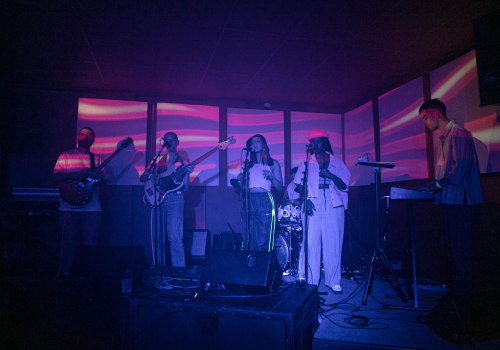
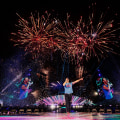
This is the first time I’ve seen them, but in an eerie way, it all feels very familiar and predictable. They must have played this set (or similar) hundreds of times in the last two years, yet to their credit, there’s no discernible sense of staleness. At the beginning, their silhouettes are projected onto the smoke-flooded stage backdrop; later, all six musicians stand atop rainbow-coloured lights; during set centrepiece ‘Love Like A Sunset’, orange lights scroll across the stage, giving off a science-fiction vibe. It is technically brilliant, and musically comparable to what we hear on their records. Singer Thomas Mars is like an excited puppy, fawning around and singing in that fantastic French accent. During the handful of quiet moments, Faithless’ set can be seen and heard clearly from up on the hill, which immediately quashes any sense of intimacy between we and they. Still, it feels more like a headline set than what we witnessed at the main stage. An extended version of ‘1901’ aptly closes the evening, and thus a rather average festival whose true musical highlights could be counted on three fingers. It’ll be interesting to see whether the Good Vibrations bus is back out on the road again next year.
Andrew McMillen
(Pics: Justin Edwards)