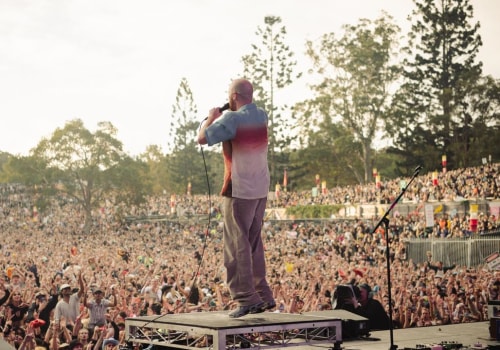
After spending ten years at the forefront of Australian hip-hop, you could forgive The Herd if they became complacent. Ten years in anything is a long time, let alone the music business. Yet complacency is the furthest thing from the minds of this Sydney collective, whose eight members have earned a reputation for both their energetic live shows – owing equally to the live instrumentation and sheer number of bodies on stage – and their want to challenge Australian society and politics thereof. See: '77%', whose chorus call of
“These cunts need a shake-up” was directed at the '77%' of Australians who (according to a poll) supported the then-Howard government’s response to refusing to allow a distressed fishing vessel, the Tampa, to enter Australian waters. See also: 'The King Is Dead', which celebrated Howard’s removal from office.
This overt politicisation wasn’t always apparent in The Herd’s musical output, though. Their first single to achieve triple j attention, for instance, was an ode to ordering food at a take-away store (‘Scallops’). During their career, they’ve released four albums; over time, the quality of songwriting and production has steadily increased. Though they’ve got their eyes on release #5 later this year, The Herd are currently embarking on a short run of shows to celebrate their 10th anniversary (or birthday, depending on which way you look at it).
The morning after the tour’s first show in Newcastle, TheVine connected with Kenny Sabir (a.k.a. Traksewt, who plays accordion, clarinet, and beats), a founding member of both The Herd and their associated label Elefant Traks.
--
First things first, Kenny. How'd last night go?
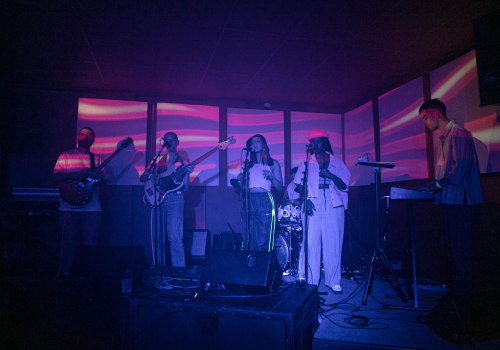
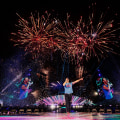
Last night was great. After not playing for two years, there was that nervous excitement of, “Oh, do the crowd still remember us?” But when you’re up on stage, it comes back to you about how it feels to be playing. The crowd were into it. We got to try out the new single (‘The Sum Of It All’;
TheVine review here). It went down well.
I take it you’re playing something similar to a 'greatest hits' set for these shows, since you don't have a new record to promote.
Yeah. We’ve got the new single, and we’ve got lots of new tracks, but we’re not thinking about [playing them] on this tour. We’re doing a new beat, but we might use it as an instrumental for freestyles. There’s a lot of stuff we’d love to play, but they’re not fully finished yet.
I'm interested to know some of the differences between touring Australia now, versus when the band started in 2001.
One thing is that, when we started, we were very Sydney-centric. The label wasn’t purely hip-hop back then; we were doing electronic stuff as well. Back then, a lot of the focus was on the label itself, The Herd were more unknown. We started to get dedicated fans. You’d see the same faces quite often. Once we started getting more radio play, we started venturing [outside Sydney]. The first gigs in other cities were hard. We started gigging around before the radio [play] really took off, too. But after that, it was a constant groundswell. We’d get a lot of love from Brisbane and Melbourne, and it kept ramping up. Some of our craziest shows have been in the other cities.
It’s changed a lot. Getting into the festival circuit was very hard initially, as we were independent and we didn’t have the arrays of contacts that you need to get into that circuit. But it’s always been fun, and they’re great guys to be touring with. We still have the same problems that we had 10 years ago, of trying to organise eight or nine people to leave somewhere for breakfast [laughs].
I'm guessing you take better care of your physical health nowadays, too.
[Laughs] Yeah. It’s pretty diverse in the band, you could say. There are more things we’re aware of, that we have to worry about now. We’d like to think that we take better care of ourselves now, but when you’re in the mode of touring, you switch on your ‘touring brain’ and you start living how you used to live.
Click to enlarge
How did you first come to be involved with The Herd?
I started the label in 1998, and then I got some friends to help out run the label. In 2000, I was organising a festival called Sound Summit, in Newcastle. After that festival, me and a few of the guys who were helping me out were all pretty rugged. We wanted to relax and have a little holiday, so we said, “Why don’t we just go to the Central Coast and start writing music together?” Previously, we’d all written music individually, and submitted [it] to compilations. So we tried collaborating. That was me and Shannon [Ozi Batla] at first. We sold the idea to a lot of artists we respected. We all shipped up our studio gear, computers and keyboards into a holiday house up there, and that’s how we started recording. What came out of that was The Herd’s first album, which was written up there.
In those early days, was the accordion a part of the mix?
No, no. [At the time] I was being the producer; there was three of us making the tracks. The accordion didn’t come in for a couple of years. Initially we were using this software I wrote, called DASE. We’d have three of us on laptops, and we’d all be plotting beats together live. That’s what The Herd backend was, pretty much. And then we got Dale [Rok Poshtya] to play bass with us. Byron [Toe-Fu; guitar] was up in the Northern Territory at that time, so he’d come down sporadically, but mostly he was not with the group. We’ve had different iterations of different people being in the band, in the early days. The accordion would have come in maybe 2004, or 2005. We were just thinking of different ways that we could do stuff on stage that wasn’t just all of us behind laptops [laughs].
Was that a hidden talent of yours? Did the others know that you could play accordion?
It was something I’d learned for like two years when I was in fifth grade. I used to just switch around, learning different instruments when I was young. I thought it became part of the arsenal that I’d never touch again [laughs]. We were talking about how we could bring keyboards into the band, and I was like, “Hey, I’ve got this old thing at home. It’s an accordion; we could use that as a keyboard for some sounds.” They were like, “Oh yeah, let’s see what happens.” There was slight hesitation where everyone thought it was really weird, but after a while, I was persistently bringing it around. Now it’s kind of stuck to what we are, so people expect it, in a way.
It’s become a distinctive part of the band’s sound.
Yeah. And then I updated to a digital accordion, so now I’ve got all different sounds I can play with it. I play piano, strings, horns, and other keyboard sounds from it. It’s added a diverse element to it – but it isn’t a keytar [laughs].
The Herd - '20/20'
The Herd are considered veterans of the Australian hip-hop scene. What's it been like to watch that scene evolve over the past 10 years?
It’s been really good. It’s really refreshing to see all the production levels getting better and better. It drives us further as well, thinking that, “Wow, we have to do this to keep up”. When it’s just you [creating music] by yourself, you can get lethargic and lazy in that you’re not being shown different opportunities of what you can be. But when lots of people are doing it together, there’s a groundswell. The music, the lyrics; everything gets pushed further.
And Australian hip-hop has become practically mainstream during that time, too.
Yeah, definitely. When look at the music industry, and what’s in control of it, a lot of them have come from rock and pop backgrounds. When you look at the crowds, hip-hop does really well here on the festival circuits, and getting people to gigs. It’s been a changing of mentality for the industry, as well, for them to realise that people going out [to gigs] are actually into this.
THE HERD - The Sum of it All by Elefant Traks
How's the response been to ‘The Sum Of It All’, with the ‘pay what you want’ model?
It’s been really good. Music distribution is changing so fast. For the upcoming album, we’ve been asking ourselves – “what are we going to do differently? This is our fifth album; how can we not be hitting the same pattern that we’ve done over the last four? Where are things headed? What do the punters want?" When you release anything these days, there’s someone ripping it straight away. It’s up on the peer-to-peer networks; it’s up on YouTube. So in a way, you have to embrace that. You’d rather be in control of it, as opposed to everyone else being in control of it, and no-one paying for it anyway. I count the success of iTunes as: when people are given an option of getting [music] easily and paying for it, lots of people will take that option. They could probably still download it if they want. It’s not that people are so sinister, it’s just that media distribution is changing as well. So you’ve just got to embrace it.
Some people have been paying like $50 for the single; we’ve got a few $20s and $10s, too. I think this is different because it’s an independent label, as well. People that really love what we’re doing can reciprocate that in their money terms, if they have that available. It gives them the option. People can get the song for 10 cents or $1 if they want, but it’s on them. They know that, because we’re an independent label, there’s not a hundred hands splitting their donation. Most of it comes straight to us.
That ‘pay what you want’ idea, did all eight of you agree to it?
Yeah. There hasn’t been any conflict about that. We put through an idea, and everyone was silent for second, thinking it over. But yeah; everyone’s cool with it.
Are you able to give any figures on the song's sales so far?
I haven’t got an accurate account right now [laughs]. I haven’t looked recently. I know that in the first couple of days, [downloads] were in the hundreds. Even just from our mailing list; before we started out sending press releases, we got a big take-up straight away. Our mailing list has been a great way to get to the fans. Twitter, as well.
(Continued next page)