














Justin Heazlewood calls his third studio album as the Bedroom Philosopher “The Dark Side Of The Moon for people watching”. That’s a joke, but it does indicate the extent to which Heazlewood tapped into years of riding public transport in Melbourne for
Songs From The 86 Tram. A defiantly Australian chapter in his musical comedy career, the album uses a single tram ride to explore a cross-section of archetypes. Heazlewood perfects this concept album with alternately scathing and affectionate characterisations, slipping into voices and nailing every detail. A collaboration with producer Chris Scallan (Avalanches, Cut Copy), brass arranger Harry Angus (The Cat Empire), and backing band the Awkwardstra, it’s the studio realisation of Heazlewood’s award-winning show at the Melbourne International Comedy Festival.
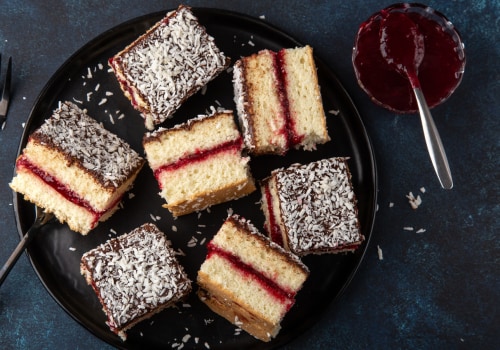
On the opening keyboard dirge ‘Middle Aged Mum’, Heazlewood manages to rhyme 'lamington', 'Flemington', and 'Lady Remington'. He channels a kindly grandmother on ‘In My Day (Nan)’, reminiscing,
“We used to walk to school five miles in the snow / Cocaine was everywhere.” And with a credible accent on the spoken track ‘Sudanese’, he brings levity to the immigrant experience:
“I like Melbourne but feel that I am judged by my colour … the colour of my scarf.” Then there’s the bogan ballad ‘Trishine’ (
“Words are shithouse”), the hipster-skewering single ‘Northcote (So Hungover)’ (
“I gotta go / I’m running out of street credit”), and the faux skip-hop of ‘We Are Tramily’ (
‘This is my tram / These are my beats’).
Having grown up fairly isolated in Burnie, Tasmania, Heazlewood now writes for Frankie, The Big Issue, and the Triple R sketch show
Lime Champions. He has penned radio-friendly larks like ‘I’m So Postmodern’ and ‘Golden Gaytime’ and last year played a young John Safran on the ABC’s
Race Relations. Discussing
Songs From The 86 Tram at length by phone, Heazlewood was all too articulate about his work. The dryness of his wit doesn’t always translate into the transcript below, but rest assured it was a refreshing interview anchored by Heazlewood’s idiosyncratic charm.
--
Was this record just a result of soaking up details along your local tram line?
Yeah. I was on the 86 line for a good five years when I first moved to Melbourne. I just wanted to turn the whole artistic output outwards rather than inwards, because the last album was pretty much an exercise in quirky self-exploration: all my neuroses and blah blah blah. But you get really bored with that once you’ve done a whole album of it. The last you want to do is think about yourself at all. So I started exploring characters in my work. I started doing a nan voice and a bogan accent. The whole mask thing was more fun. You can just hide behind other people and lose yourself a bit.
Had you done characters in the past?
Yeah. I was tapping into a bit of an acting background back at Uni. I used to act a fair bit. I sort of let it go by the wayside. I like the idea of character voices in song on a CD, because the audience get to use their imagination. You don’t have to worry about which silly hat you’re gonna put on or the controversial blackface, which seems to be pooh-poohed these days. You can just do an African accent and you’ll be okay hopefully. I was keen to do a wide variety of characters, and I had to really challenge myself. I mean, if you’re going to do a CD called
Songs From The 86 Tram and you don’t include some kind of fair attempt at a multicultural-type person from another country, that’s kind of racist in itself. If you just leave them out. Us lefties are getting a bit too PC for our own good. It’s like, ‘We mustn’t do any type of accent or that will be racist’. I think you can be too safe. And in Australia, we have a kind of larrikin, laconic sense of humour. And I think satire is the sign of acceptance of other peoples. If you’re going to get ribbed in a friendly-ish way, that’s a sign we’re comfortable with you. I liked including a Sudanese person because it was the last thing I would expect from myself.
And that track is more making fun of Australia using that character’s fresh perspective.
Yeah, I mean, when you think of satire, you usually think of paying out another race or nation. (Laughs) I never do anything remotely political or vaguely controversial or social commentary, so it was a good challenge. I thought just trying to do the accent would be enough that people would have their defenses up, like, ‘Whoa, mate, where ya goin’ with this?’
You also do a sort of young, hip Australian accent.
The new Australian American accent, I think; the Northcote accent.
The Bedroom Philosopher - 'Northcote (So Hungover)'
It reminds me a little of the California “valley” accent.
It’s not far removed from that. I have a few slight hang-ups about the bombardment of American culture we’ve had, and British as well. From growing up with Sesame Street right through to any comedy on TV being British or American, I feel like we’re really up against it to forge any kind of uniquely Australian culture. And then we’ve got our own cultural cringe. We’re not that proud of ourselves anyway, and we like to cling to things from overseas in a bid to boost our egos. The line [on ‘Sudanese’] that Australia is basically just America with Milo and possums... at times that’s how I feel. It’s just a bunch of American shops and TV and music, so what are you left with?
This [album] is also a real exercise in doing something almost commercially, suicidally, local. You’re always told to think about overseas markets and even interstate markets, and I’m shooting myself in the foot by alienating Sydney audiences. But this is how I roll. This is just me having my little rebellion, my sort of punk protest against this Gen Y, internet-savvy [way of] thinking about the business side of it and the marketing. I’m like, 'fuck that'. I just want to write something that’s completely Australian. Yes, it has in-jokes that only people in Melbourne or Australia will get, but that’s what I’d want to hear.
Musical comedy works on two levels: there’s the humour of the lyrics but also the humour of the actual music you choose to play. The first track, ‘Middle Aged Mum’, is a good example of those elements working in tandem.
I’ve always been really, really passionate in the belief that musical comedy should justify itself by the music being really good. I think if the music isn’t any good or is disposable or just a couple of chords, I don’t see how that’s justified as an artistic practice. You may as well take the jokes in there and present them as stand-up. If the art form is going to have any validity, the music needs to hold up its own end. The two can compromise each other; it’s taken me years to get the hang of it. I feel like this is maybe the first album where I have. I’m also kind of breaking traditional musical comedy rules, because even like Flight on the Conchords, their lyrics are way upfront. Most comedy fans want lyrics way out front because they’re there for the jokes. The music’s a bonus. For ‘Middle Aged Mum’, I’m getting feedback that the lyrics could be louder.
Yeah, I was surprised the vocals are so couched, especially since it’s the first track.
I know, it’s weird. The producer just mixed it like that, and he’s an experienced music producer. He was like, ‘Well, this is where the vocals would sit on this sort of song’. And I like the idea of it. To me it’s an artistic choice.
It does make it seem more like that kind of song and less like imitating that kind of song.
Well yeah. That’s a really hairy song to pull off. In the show, people were like, ‘Oh my god, what are you doing opening a comedy show with a really morose character portrayal of a middle-aged woman?’ It’s not Comedy 101. But that was me purposefully wanting to throw people off a bit. They say middle-aged women often get an age where they feel invisible; maybe their kids moved away and they’re ageing and they feel like they’re virtually irrelevant in society. I like the idea of juxtaposing that with that character kicking off an album. And the vocals are a little down, but I’m trying to reflect how middle-aged women feel like they don’t have a very strong voice in society. They’re just sort of in the background. I know that’s going to frustrate a lot of people, but that’s just me to a tee. My last album had some slightly irritating Cookie Monster-style voice in the single, and that infuriated maybe three-quarters of people. But, well, that’s okay. I can live with that.
How much does the album’s sequencing reflect the standard live show?
The thing I like most about the structure of the show is that it’s a journey through the suburbs. Each of the characters should reflect the suburbs. So you’ve got your Sudanese guy: he’d probably be living a bit further out, like Preston way. And you’ve got your hip-hop dude, who’s probably out there as well. And then your more hipster dude in the Northcote area and your business guy in the CBD. So I pretty much kept the sequencing the same as it is in the show, because by that point, it was so set in stone that it felt really weird to move it around. I made the decision to not have some characters: there’s a junkie character and a little kid character in the show that do talking monologues. But from my experience of people putting on Tarantino soundtracks at parties in year 12, all the talking stuff will just piss you off after about the second play. I’m always really conscious of not pissing people off at parties. I put in an interlude that’s just a little bit of conversation to help hammer in the concept-album nature of it. It might seem surprising, but I am actually wary of annoying people too much.
It does reflect the tram-riding experience, right down to ‘Song To Nod Off To’. I actually forgot what I was listening to while that was on, thinking it was some band’s instrumental track, and then of course it’s interrupted by the nan character from ‘In My Day’.
The Bedroom Philosopher - 'In My Day'
In the show I’m nodding off and my head keeps bobbing up and down. I end up folding down halfway, falling asleep. That’s a classic moment of Bedroom Philosophy: you’re just some frustrated musician deep down parading as some alienated clown because you don’t get to be Josh Pyke. It’s like, ‘Well yeah, no shit’. I get moments like that song where I just pretend I’m in Boards Of Canada and make some layered instrumental piece. I like jokes like that that would almost infuriate some music fan: ‘Why have you got some piece of music that nice followed by some ridiculous nan impression?’ Well, it only works if the song is good. If it was some throwaway, band-in-a-box bit of ambient synth or whatever, it’s not quite the same.
And that’s how it is in real life, letting a song block out the world until it comes knocking again.
Yeah, you’re in your own wonderful personal space. I wanted to lull people with a really good piece of music so you can get nicely ripped out of it.
Do you use your live show to figure out what works and what doesn’t?
I suppose lyrically. The beauty of this comedy-music crossover thing is you get to do like 16 gigs in a row for the Comedy Festival and be honing the shit out of the lyrics, dropping things that aren’t working and testing out what’s funny. By the time I’d gotten to the studio, I’d done the show about 20 times, so the lyrics are pretty much set in place. Often songwriters can still be mucking around with their draft lyrics up until the day of recording, and that’s a real panicky process. I didn’t quite have that problem, except with the accents. Listening back now, I think I could do the Sudanese accent a bit better. You need a hell of a lot of practice to get them right. But in most cases, most of the performances I’m really happy with.
Is it weird to be in this sterile space trying to get some definitive version?
A little. I’m actually almost more in love with the whole studio recording process than I am with performing live. And I learnt a hell of a lot with the last album. I’ve got a lot of studio confidence, which I think there’s a lot to be said for. It’s hard to play your best when you’re overwhelmed or freaked or having to make 900 decisions about EQ on your vocals and where the drums are sitting. So having a full-band-ish album before this, I was a lot more relaxed in the studio and trusting of the producer. It was a good place to be.
Do people ever suggest song ideas to you?
Not as much as I used to get. I’m glad. Maybe for some people, the novelty value of what I do has worn off. The first couple of years when you say you’re going to be a musical comedian, everyone is expecting it to wear off. After eight years in, it’s not quite as funny. But I’m getting a bit that I need to do a follow-up album with songs from the 96 tram and the 112. People want me to go down the Sufjan Stevens road and write an album per tram line for the next 50 years.
Do you think there’s something unique to the 86 line?
The 86 just always seemed to have this iconic [status]. That was the tram line where’d you say it and people would pull a certain face or roll their eyes. No other tram line quite had the same wry grin attached to it. The 112 gets all sorts of odd bods on it, so certainly the crazy factor isn’t exclusive. But there’s something about that Smith Street run that just seems to sum it all up. (Laughs) You’re cruising past Safeway and you’re going to get some kind of desperado wandering on and off.
When I watched Race Relations, I thought that was you but doubted it because it seemed like an odd choice. How did that happen and how was it as an experience?
I met John a few times through Comedy Festival stuff and we seemed to get along. He once labeled me ‘the most awkward comedian in the Melbourne Comedy Festival’. That was a compliment from him. I just got called in to do a general audition because I was vaguely on the ABC’s books for certain acting stuff. I had to recall a Jewish prayer in the audition, and I actually recognised it from a Beck song, ‘Little Drum Machine Boy’. So when I looked at the script, I said I recognised it from that. And John said that was the thing that tipped me over the line. He said it was just such a cool, Fitzroy thing to say. He was bagging me out while saying it was kind of cool. But yeah, [the show] was extremely fun. Possibly the best two weeks of my life. Having a car pick you up every morning and taken to location, sitting around in big jackets drinking ABC coffee. I could really get used to it. Because I hadn’t acted in so long, I realised it’s actually something I’m kind of good at and really like doing. I thought it was a pretty weird choice too. (Laughs) We do have a slight, intensely internalised energy about us, maybe. There’s something a little similar about us in vibe that maybe came across on screen.
The weirdest bit was two pashing scenes. The first one went alright but the second one, the girl refused to open her mouth, even though the script said ‘pash’. It was the very last shot of the entire thing, and I got to end on this pash with this really cute girl. And she’s being real funny about it. So we just moved our heads around and it looked convincing on screen. And the other thing was I had to shoot myself in the head in the suicide dream sequence. That was pretty much the only thing my nan tuned in to see: her grandson’s debut on the ABC and it was just me blowing my brains out. A bit of a ripper.
Doug Wallen
Songs From The 86 Tram is out now on Shock.
BEDROOM PHILOSOPHER SOLO TOUR
Wednesday 28th April – The Front, Canberra
Thursday 29th April – The Vanguard (Sydney Comedy Festival), Newtown
Friday 30th April – View Factory, Newcastle
Wednesday 5th May – Grace Emily, Adelaide
Thursday 6th May – Alley Cat, Hobart
Friday 7th May – Royal Oak, Launceston
Sunday 9th May – Brisbane Powerhouse, Brisbane