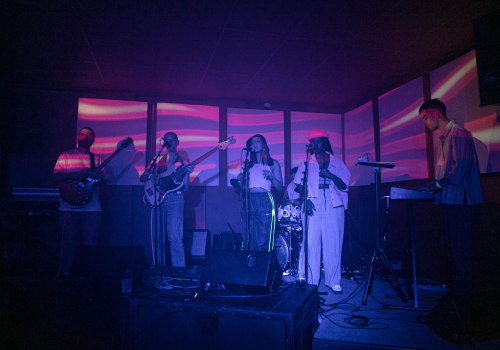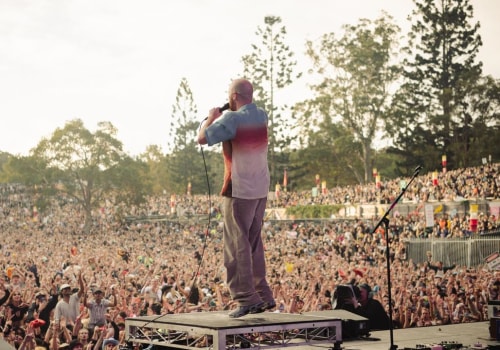


















Regurgitator’s core creative duo of Quan Yeomans (guitar, vocals) and Ben Ely (bass, vocals) are back in action. Previously, the ‘shock pop’ band – stable for most of the last decade with Peter Kostic (Front End Loader, Hard-Ons) behind the kit - were responsible for some the most interesting sounds to emerge from the burgeoning Australian alternative music scene of the mid-1990s.

Having both relocated to Melbourne, Yeomans and Ely recently commenced work on the next chapter of the band. While Kostic is geographically removed in Sydney (though he is still drumming with them in a live capacity), the duo recently tapped wild Melbourne drummer Cameron Potts to work on some ideas at Melbourne's Head Gap studios, the fruit of which was released this week on the band's Soundcloud account. Such a move hints at the band's future: Yeomans states that the band will "eschew the stock-standard album release/record label scenario for a 'take it as it comes' approach more in synch with current trends of the listener". TheVine got in touch with the singer/guitarist in late August 2010 to discuss these trends (and others) in depth.

--

Before we talk about the new material, I'd like to go back a few years to talk about Love & Paranoia (2007) briefly.

Oh, do we have to?

I'd like to know what you took away from that album release. How do you feel about it now?

I don't know. Slightly embarrassed, I guess. I don't really feel anything for that record, to be honest. I remember all of the things we did to get through it, in Rio [de Janeiro, where the band recorded the album], which is kind of funny. And it was fun having Seja there and being in that strange apartment in the middle of Rio de Janeiro. It was kind of interesting, but musically, [blows raspberry] - it means nothing to me in particular.

You're embarrassed by it?

Oh, well, I wouldn't say embarrassed. I don't think about it. No-one comes up to me and goes, "What do you think about that record?" I don't really feel embarrassed on a regular basis, but I felt a twinge then when you asked me about it, so maybe that's a realistic understanding.

Did your experiences with that album shape you in the new approach to releasing music? Or do your feelings toward the record industry go further back than that?

Being on a major label really shapes the way you feel about them. Seriously, the guys that we were kind of working under - so to speak - were more interested in football than music, as far as I could tell. It's kind of good to get away from those kinds of people. You have to understand an industry does that to art, and that's the function of industry. Industry is there to sell. So you can't really expect anything else.

Regurgitator will be primarily releasing material online for the foreseeable future. How does your relationship with Valve [Records, the band’s label]?

Valve is basically our manager's label [Paul Curtis]. He's totally into it.

I thought so. I've chatted with him a few times about it, so I know that he’s on the same wavelength.

Definitely. What’s the point of being on an indie label if you can't break away from the old cycle anyway? The old paradigm, which is completely outdated now. You have to face it.

I saw in another interview you mentioned that to be truly independent of the industry you need to forget the old release mentality and match the current listener mentality.

It's my mentality as well. I don't listen to albums, and I haven't done for years. I download all my music. If I like it, then I'll delve into the band and I'll go see them live, or whatever. I have to really like them to see them live, but that's the way it is. In industry, this type of thing happens all the time. People get made completely redundant, their old skill sets just go out the window overnight because of technological advances. It just so happens that our job is part of that set now. We just have to respect it and move on.

It's obviously easier to get involved in something that you're not adapting to; for example, when it comes out of a natural progression; you have kids that are born into this stuff. Obviously, they have the upper hand, but I always loved technology and I loved computers, and I loved working with computers and using them creatively. I wouldn't say that I love blogging every week or every day or anything like that, but I appreciate the value of it, and I can see how people become addicted to it and compulsive with it.

I've had a few listens to the four tracks that are online at the moment, and the songs showcase a few different styles. I'm interested to know if they're representative of where the band is at musically right now.

I'd have to say yes. Whether we'll be like that next week is another question. [laughs]

Tell me about the writing process here. Were they written before you entered the studio?

Yeah, they were. We were rehearsing with a different drummer this time, a guy called Cameron Potts, who was available. Peter [Kostic, their drummer since 1999] is in Sydney and unfortunately me and Ben are both in Melbourne, so it becomes a little costly to fly him down just to rehearse. So we can't really do it that often.

The problem with this particular set of songs was it was kind of smack bang in the middle of our last project - performing a live score to Akira [at the Sydney Opera House] – which was just incredibly demanding. This one was a fast thing that we wanted to release and get done. It was the first time we'd been to a proper studio in years, I think. Looking back on it, I don't see the point in even doing that anymore. I think we're capable of creating stuff at home and having it sonically as good, if not better anyway, so that's another part of the paradigm that really is becoming less and less important.

Tell me about Cameron.

He's a really great drummer. He plays in Cuba Is Japan, and used to play in Baseball as well. He’s a Melbourne guy, and a really talented drummer. He plays violin really amazingly, as well. He's a really creative person and it was really great to work with him, as opposed to Peter who is an incredible drummer, but really technically-orientated and kind of has taken a backseat in terms of putting up with our dictatorship-like mentalities when we are in the rehearsal space, which I feel sorry for him about!

Cameron was a little bit looser, and strangely, those two [Peter and Cameron] went to school together in Perth. That was kind of cool. [Cameron] was great to write with and a little bit different in the studio because he's obviously not as technically intense as Peter is, so I don't know; the sound of the drums could have been a little bit tighter in my mind, but we went in with a guy we'd never used before, Casey [Rice], who is known for doing indie records. He was just like "It's gotta be this way, and it's gotta be like a live band. Just deal with it." Ben was really into that idea, and personally I'm a bit more into shaping the sound in a controlled environment, but I just let myself go with this one just to see what would happen. It's different. I think it's good.

The new track ‘Midday Sun’ is unlike anything I've heard from you guys before. Is that you playing synth on that song, now that Seja's departed?

No, it's all Ben. That song is all Ben. He's gotten pretty spacey actually [laughs]. He's really into psychedelic stuff. That's a great thing about having Ben as a creative partner; he's so different to me in so many ways. I think that makes it more interesting for an audience as well.

It's cool that you guys let each other do your own thing. It seems you're more into the hip-hop than Ben, whereas he's into the electronica.

Yeah, kind of. He's really into lo-fi, he's really into psychedelic rock. He's an incredible bass player and he likes really out-there, melodic kind of stuff, and really spacey kind of things. He's done a lot more drugs than I have, as well, so… [laughs] It's all understandable.


Regurgitator - Studio Diary 1 - 2010

Right. I read that you're going to try to release new recorded material on a monthly basis, which makes me wonder; are you guys usually procrastinators when it comes to writing and recording?

I think that actually having an album in mind might make it harder for us. It seems to be a more natural way to work, to me – as an artist you tend to focus on one particular track, maybe two at the most, so you have something to A/B against. Then you want it out of your life as soon as possible. It does alter the artistic choices that you have to make because you have to see it in a bigger body of work when you're working on an album. Also, there's the whole track listing thing, but it's always been a nightmare for this band. Track listing has been like "how do we do this?" As soon as we finish an album, we’re like "We've got all these songs and none of them seem to match any of the others, what are we doing?" In this way, I think this matches our creative output probably better than most bands.

You said yourself you don't listen to albums, so – why does the track order matter? Why can't it be like a shuffled type thing?

[Historically] it kind of is. Listening to one of our albums start to finish - which I haven't done for years. I'd never expect anyone to do - but I'm sure it’s a bit like listening to an iPod shuffle, because it's all over the place. It just saves us the hassle of ordering it. [laughs] It is something you do tend to think about. It may not matter to the audience at all.

Are you thinking in terms of number of tracks for this album, particular length, or just whatever feels good?

Essentially there's not going to be an album. It's going to be compilations that'll be sold live as limited editions with artwork attached. If people are interested in buying that and supporting us in that way, then fine. Otherwise, it's all going to be free downloads essentially, at high res, straight from the studio.

(Continued next page)