


As chief trip-hop genre-definers, Massive Attack exist in 2010 as production duo Robert del Naja [stage name: 3D] and Grant Marshall [Daddy G], who work alongside co-producers, session musicians, and guest vocalists to skilfully mesh elements of electronica, hip-hop, drum-and-bass and house. Following the February release of their highly anticipated - and frequently postponed - fifth album, Heligoland, Massive Attack are touring Australia for the first time since 2003.

On the eve of their performance at Perth’s Kings Park, Andrew McMillen connected with Daddy G to discuss controversial artwork, digital downloading, and Massive Attack’s two appearances in Triple J’s Hottest 100 Of All Time.

--

How’s Perth going, Grant?

Hot. Shiiit, man. I thought I could deal with it, but this is something else, boy.

What do you recall from the last Australian tour in 2003?

I don’t recall that much, to be honest. I normally have a great time down here, we have a great reception. There are quite a few people that we know down here, in Sydney and over in Perth. So there’s a bit of a Bristol connection here. We’ve been more than welcome, really.

You’re in Australia for nearly two weeks, and you’re playing six shows. Do you have any plans for your downtime between shows?

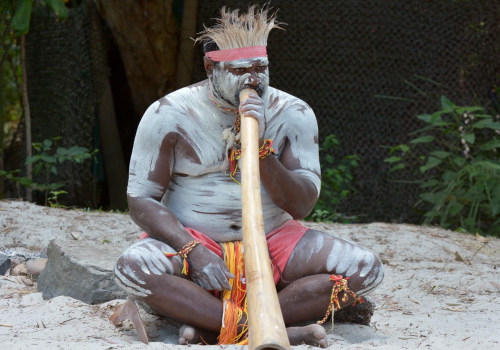
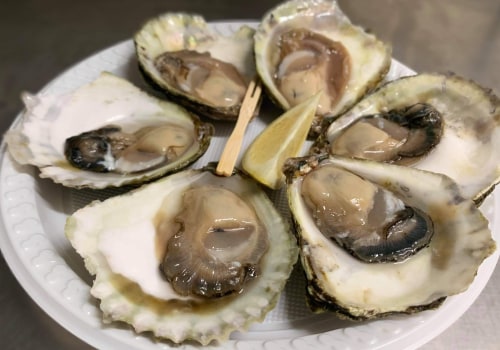
To eat oysters kilpatrick, that’s the main thing! [laughs] As well exploring additional things that are going on in each city. There’s a lot of catching up I’d like to do. I might do some didgeridoo playing as well. Last time we came, we hooked up with some guys that were didgeridoo players, and we ended up taking them all over the country with us.

Are you looking to do that again for this tour?

We’re always looking to do things like that; when we were in Mexico we hooked up with a traditional horn player, who ended up coming on tour with us. It’s quite interesting to hook up with indigenous players.

Do you have any DJ sets set up while you’re here, between shows?

Going back to the old days when [3D and I] were DJs with the Wild Bunch, that was our main thing. We loved to play records at warehouse parties. We were quite instrumental in putting on a lot of parties in Bristol. The more illegal, the better they were [laughs]. The more exciting they were. We still like to be able to go to cities sometimes and play parties, to keep up with the old spirit. It’s where we originally came from.

Nowadays, I find it DJing slightly distracting when I’m making music, so I don’t want to do it that much [while touring].

How many players are in the Massive Attack touring band?

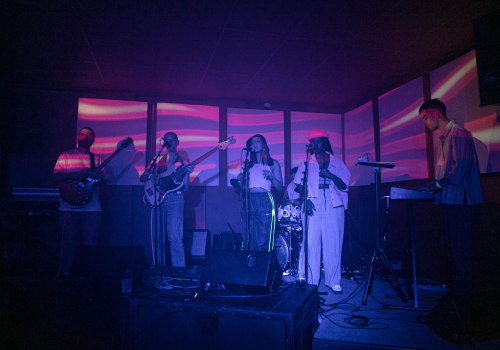
The whole thing has evolved from a DJ thing to the band-based thing now. It’s a full rolling kit. We’ve got a traditional band. There’s eight or so in the band, then six singers, and obviously the back line. There’s about 30 of us in the touring party,

The new album debuted at #8 here in Australia. Do you pay much attention to your record sales?

It’s nice to know that people are buying records. We do pay attention but we’re not obsessed about the chart position, as such. With us it’s always been a case of a long haul rather than the short sprint, really. Obviously, that’s the reason why we’re touring as well. Anyone worth their salt nowadays is touring, and that’s the way you sell records. Well in fact, no one sells records nowadays, really. [laughs] So it’s where most bands make their money, and that’s where we are, at this stage.

Touring is a way to interface with people and a way to make yourself known. The visual side of what we do is just as important as the aural side of what we do. When we were united as [The Wild Bunch] sound system, graffiti was the backdrop for hip-hop. We had the whole visual thing worked out, and we’ve just turned that ethos forward, really. We’ve always considered the artistic, visual side of our work as important as our music.

Heligoland’s album art has been a bit controversial. I saw that it was banned from the London Underground for too closely resembling graffiti. What was your reaction when you first heard about that?

Our first reaction was to laugh our heads off. [laughs] It’s really weird, because a decade ago, [famed graffiti artist] Banksy was enemy number one in Bristol because of his drawings. And now Banksy is like the most loved character in the world and they were actually crying out in Bristol, that somebody had defaced his graffiti. There was an outcry, “How could you deface this? This is our heritage!” It was funny to hear them talk about Banksy being a hero, where once he was vilified for being a criminal. So for the London Underground to ban our artwork, it’s totally hypocritical, really. It’s laughable!

I noticed that Heligoland is bundled with ticket sales here in Australia.

That was the label’s idea. In a way, that was their pull-in tactic. It’s not something we would probably do ourselves. It’s hard to get people to buy records, so you need to give them more. [Give them] what they really want. People are just going to download your stuff for nothing. For us, there’s always been great visual content with the artwork, and what 3D does with the album covers and stuff like that. It’s a case of giving people something that they feel they need to own, or want to own.

The last Massive Attack album [100th Window] was released 7 years ago. What kind of changes have you noticed in that time about releasing music?

Well, I’ve got two nephews. I watch their activities. As far as they’re concerned, they’re not interested in paying for anything. If they can download something - a game, or a bit of music - then they will. Nowadays, it’s virtually impossible to sell music. That’s why you have to give away more than you want, really, to attract people to your site. There’s got to be a total interaction there with people all over the world, because anyone can download anything now, but it’s a case of creating something or doing something that people want to own. That’s the hardest bit. [laughs]

Does it frustrate you that people can just rip something off that’s taken you years to create?

It’s obviously frustrating. It’s changed. When I first came into this, I kind of thought “ooh, I’ll be selling millions of records, and hopefully become quite wealthy from it!” [laughs] That was the dream! Nowadays, that’s completely changed. I do understand that the way things are, you’ve just got to move with the times. The money is now with touring.

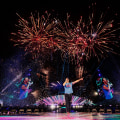
For the last three or four tours, a company called United Visual Artists (UVA) have provided the LED screens that we take on tour with us. They take up the whole back of the stage. They’re quite spectacular, and for us it’s a chance to give [our fans] something a bit more [than an album]. Growing up, I saw bands like The Clash, and they were embedded in my head because they were amazing live shows. Real spectacles. I’ve learned that you’ve got to give people something that’s quite memorable.

In an interview last November, you mentioned that “the whole album concept is dead, in a way”. Would you like to elaborate on that?

When I said the whole album concept is dead, I didn’t actually mean it as such. I still buy records, but often not for the whole album. It’s very rare nowadays that I’ll buy an album and like all the tracks. I won’t listen to an album in whole; I’ll listen to an album as part of a compilation of other tunes. That’s how a lot of people seem to be listening to music nowadays.

The album concept is dead in one respect because people just download what they want with iTunes and stuff like that. With Massive Attack, each track has its own personality to us. It’s less about creating a ‘top to tail’ concept album, and more of a case of trying to fit [each song’s] individual personalities together as well as possible. That’s how we compile albums.

When I listen to Massive Attack, it conjures up images and feelings of darkness and menace. It feels quite odd and incongruous to listen to your music while the sun shines. What do you make of that?

I feel you in that respect, but there’s always light where there’s dark, as far as we’re concerned. It’s never a case of us sitting down and trying to write the darkest stuff we can imagine; there’s still some blood on either side of what we’re doing. To be honest, I think it’s more a case of [engaging with] topics that are thought- provoking.

To change topics entirely - are you aware of the Triple J’s Hottest 100 of All Time?

Is that the radio station?

Yeah. Last year they held the Hottest 100 Of All Time, which polled the nation’s favourite songs.

Did they? I didn’t realise that.

Two of your songs were voted into the top 100 songs ever written.

Which tracks are those?

“Unfinished Sympathy” and “Teardrop”.

Oh brilliant. Lovely.

There was a bit of controversy because your two tracks were the only ones to feature female vocals.

Is that right? That’s rather sexist, because as far as we’re concerned, the female vocal has always been the thing that’s softened our male approach. It was always quite male-dominated, even from the days when we were DJing and stuff like that. That was always the thing; we wanted to trade the rough with the smooth, as far as we’re concerned. A feminine touch was needed for our records, for the ones that gave us that edgy bit of angst that we were trying to squeeze out of tracks. I’m quite disappointed in that.

As were many listeners and female musicians here in Australia.

Jesus. That’s unbelievable, you know.

Do you write with a male or female voice in mind, or does it just happen organically as the song comes out?

I’ll tell you what, that’s a really good question. Besides [reggae singer] Horace Andy, who’s got an angelic voice that’s almost androgynous, in most respects, I always seem to write with a female vocal in mind.

Do you write with specific guest vocalists in mind?

Well, speaking about the people that we worked with on Heligoland, I’m not taking away the credit from people like Guy Garvey [of Elbow], Damon Albarn [of Gorillaz/Blur], and Hope Sandoval [of Mazzy Star], because [the songs that they sing] were originally crafted with those people in mind. They wrote those lyrics themselves, and brought to the table, then we had conversations about what we liked.

So those songs were actually written by those people, but obviously, the music and collaborations were songs that we wrote up and had Damon in mind. Hope Sandoval sent her bit over, and we knocked up a song with her. We received a whole bag of songs from Guy, and a couple of songs from Damon. And obviously, we’ve collaborated with both Horace Grant and Martina [Topley-Bird] a number of times.

Well Grant, I believe our 15 minutes are up.

Aww, shit.

I’m looking forward to seeing you guys in Brisbane next week. Thanks very much for your time.

Peace and love, man.

--

Heligoland is out now on Virgin Records/EMI. Massive Attack arrived in Australia last week and play the following venues; tickets from massiveattack.com.au.

Fri Mar 12 – Perth, Kings Park
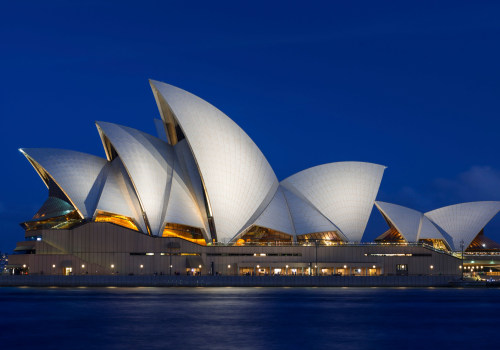
Mon Mar 15 – Sydney, Opera House Forecourt
Tues Mar 16 – Sydney, Opera House Forecourt
Fri Mar 19 – Canberra, Royal Theatre
Sat Mar 20 – Melbourne, Sidney Myer Music Bowl
Sun Mar 21 – Adelaide, Entertainment Centre
Tue Mar 23 – Brisbane, Riverstage