











One of the rituals involved in making a record is the exploratory conversations between the artist and the person recording the songs. The parties exchange small talk, compare notes on their favourite records and make sure they won't turn on each other after two months of close proximity in the studio. It's a job interview and a first date combined.

But when the frontman of Perth psychedelic-rock outfit Tame Impala, Kevin Parker, first spoke to Tim Holmes, one half of English electronic-rock outfit Death in Vegas, about coming to Australia to engineer his debut album, he took a slightly different approach.

"I told him that the Tame Impala set-up was pretty unprofessional and that there wouldn't be much for him to do," recalls the amiable Parker, calling in from his sunny backyard in the Perth suburb of Shenton Park. "Tim was totally cool with it. He said he'd bring his fishing rod and help out when needed."

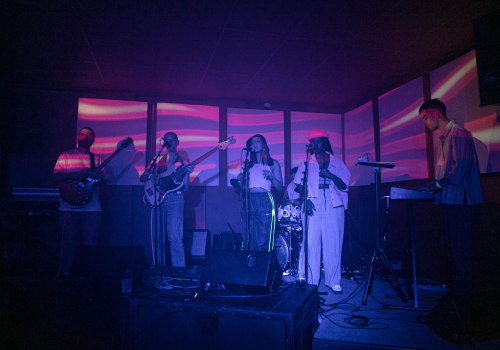
Parker wasn't kidding. Tame Impala isn't a band in the traditional sense. The 24-year-old, an audio obsessive, writes and records everything, producing sessions that mostly take place in his bedroom and involve eight or 16-track recording desks. That was how he made Tame Impala's self-titled EP from 2008, which has now sold more than 20,000 copies in Australia, and that's how he intended to make his inaugural long player.


Tame Impala - Innerspeaker 'Webisode Ep. 4'

The other members of Tame Impala – bassist Dominic Simper, drummer Jay Watson and guitarist Nick Allbrook – are friends of Parker's who help him out by playing in the band when on tour. Parker, in turn, does the same for them. He plays drums live for Pond, the studio project run by Watson and Allbrook.

"Tame Impala is just one sliver of the giant amount of noise-making that we do as a circle of friends," Parker says. "I don't feel bad doing the recording by myself because I don't expect that input in their bands. It sounds like I'm just a control freak who won't let anyone else have a turn in the studio but to us Tame Impala is just Kevin [Parker's] project and everyone has a project."

Tame Impala's debut album, Innerspeaker, is released on May 21. It marks the point where Parker's private passion officially becomes a career. "It was the first time I've recorded something for an intended release," he says. "In the past I've just recorded a song, then done another two weeks and eventually put them together."

It's the culmination of a passion for music that began when Parker took up the drums at 11. He switched to his father's guitar and made so much noise that his stepmother begged his father to teach him some chords. At 12 he began recording the drums into a tape recorder, then playing along with the tape on guitar and recording the result into a second tape player. Back and forth he would go, creating lo-fi experiments. He found a Casio keyboard in the garage and at 16 his future was locked when he got his first eight-track recording rig. "My parents begged me to treat it as just a hobby but it was too late," Parker says.


Tame Impala - 'Solitude is Bliss'

He admits he still doesn't know what underpins Tame Impala's successful aesthetic – he wonders if it's something to do with his self-taught recording techniques – but Innerspeaker extends the band's sound, exploring the counter-culture hues of '60s psychedelia and pioneering heavy metal. "I have always loved that sound but I don't know why," Parker observes. "I think I like it because the frequencies are a lot more clustered together than in modern music. Music with a low fidelity has a juicy rumble. "

Innerspeaker is dedicated to blissed-out isolation. "There's a party in my head and no one is invited," Parker sings on Solitude is Bliss. "I don't think of it as happy '60s sunshine music," he stresses. "It's delirious, alone music."

Craig Mathieson