









From the dodgy mirror ball gracing the cover of the first LCD Soundsystem album to the grainy suaveness of LCD’s This Is Happening, designer Michael Vadino has had a hand in shaping the visual aesthetic for many releases on LCD main man James Murphy’s influential label DFA. Punters in Sydney will get a long look at the label’s creative process thanks to the exhibition That’s Cool But Can You Make It More Sh*t?, coinciding with LCD’s Aussie dates this month. Showcasing the original sketch of the label’s well-known lighting bolt logo as well as many other one-time works-in-progress by Vadino and other designers, the exhibition is a unique treat for DFA fans or, for that matter, anyone at all.

In a phone interview this week, Vadino discussed the exhibition, the prevailing DFA philosophy, and the very scrappy origins of some the label’s most memorable sleeves.

--

What has your exact role been with DFA? I know you’ve designed most of the LCD Soundsystem releases.

I reluctantly at first referred to myself as the art director. I met James early on, when DFA had just formed. I think the aesthetic of the label was an idea James and Tim had, and I was there from the beginning so I just helped it along. As much as I don’t work on everything at that label, it all comes from one place. I think over the years there’s been a cohesive aesthetic to everything. I guess I had a hand in that. James and [DFA co-founder] Tim [Goldsworthy] were heavy influences; it was their baby. It came from them mostly and I helped it along.

So you’re the facilitator?

I’m the facilitator. At least in the beginning I was. James has kind of loosened the reins lately on most of the new stuff, just because he trusts that I’ll know what he wants. I don’t pretend like it’s my baby. It’s James’ thing and it should be what he wants. Luckily, I’m in agreement. We see eye to eye on most everything, so it’s easy that way. James is the creative director and I’m the art director, if that makes sense.

When DFA’s graphic identity was first coalescing, was there talk of other labels as an influence?

No, we never really referred to any other labels. We were all fans of certain things. Like we loved the whole philosophy behind Factory, but we knew that it couldn’t look anything like that. Obviously all the Mo’ Wax stuff was great. We never really discussed it. We all kind of knew what it had to be: it needed to look a little DIY, it needed to always be a little bit shitty, like it’s designed but not really designed. I always wanted the idea to come across like, if somebody looked at it, especially a designer, they would go, “Did they mean to do that? Was that on purpose?” It was. Everything was always on purpose. But as far as being influenced by other labels, not really. Not visually, anyway.

Some of the early LCD sleeves have a sloppy, screen-printed feel.

For sure. The first record, we wanted it to look like a Xeroxed copy. Like I said, a little shitty, but there had to be something subtle that elevated it a little bit.


And that’s where the exhibition’s title came from?

Yeah, the title definitely comes directly from the philosophy of the design. Oftentimes, especially in the beginning, I would come back to them with something from an idea they had and, nine times out of 10, they’d say, “Yeah, yeah. Let’s just fuck it up a little more.” (Laughs) Nobody ever wanted to be super specific about what the intent was aesthetically, so we would use words like “shitty” and “fucked up.”

What’s the origin of DFA’s lightning bolt logo, which quite crudely hand-drawn?

It is crude. The lightning bolt itself, there’s a little debate behind it. I walked into the DFA studios one day and it was scrawled on a piece of paper and posted on the wall. That piece is actually going to be in the show. I found it. The lightning bolt’s tucked up in the corner of this scribbly piece of paper. I said, “I really like that. That should be your logo.” James kind of resisted and I started pushing it on things and eventually they came around to it. But I’m not sure who drew it: James or Tim. I kind of like not knowing. But I definitely appropriated it.

For LCD at least, what’s the difference between designing an album cover and a single cover? Is the song itself ever inspiration for a single design?

Y’know, it’s different for each one. The album covers are pretty close to how James wants them. When an album comes out, it’s a pretty big deal for him. He pours a lot into it. I work really closely with him and we’ll talk for a long time before anything really starts to happen on paper. That alone makes it really different from singles. Singles seem a little freer. He gives me more freedom. Sometimes they’re inspired by the song and sometimes they’re not at all.

The singles are maybe a little more disposable, since not as many people will see them.

I guess so. I never really think about it that way, though. I usually just have a little bit more freedom to do what I want. And that’s not to say that I don’t [the rest of the time]. He’s usually just a little less involved in the singles.

I was looking at some of your work on the BUREAU website. I think the cover for the Juan MacLean’s ‘Happy House’ remixes is my favourite.


The cake? Ah, I love the cake. Thanks for saying that. It’s one of my favourite things I’ve ever done.

How did that come about, both in idea and execution?

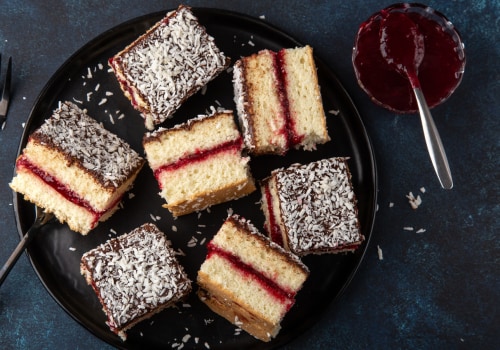
You know the designer Robert Brownjohn? He did the Let It Bleed cover for the Rolling Stones, with the cake on the tire. It came from there. I was in a heavy Brownjohn phase, just super obsessed with him and reading about him. I thought maybe I’d do a little homage to him. I didn’t want to rip it off, but it was definitely inspired by that. And there’s always this little underlying – how I do put this in a PC way? – nod to gay culture with anything Juan does. That’s what inspired the rainbow cake. It all just clicked and that was it. It was pretty easy. I sat here in the kitchen with my girlfriend and we made a cake one afternoon. And I took a picture of it.

Did the cake come out on the first try or were there several attempts?

It was first try. There was one cake. That was a lot of layers. (Laughs) That was a massive cake.

How did it taste?

It was disgusting. (Laughs) It literally tasted like a pound of sugar.

I saw on the BUREAU site that you’ve also done stuff for Marc Jacobs and Bath & Body Works, which seems like the other end of the spectrum from DFA.

I’ve gotta pay the bills! (Laughs) I’m not getting rich off of DFA.

It must be interesting to do such different projects, though.

I actually enjoy doing commercial work. I think it’s fun. It’s challenging. I like having some parameters.

Has the DFA work ever led to commercial work?

No, I don’t think so. Maybe recently. I’m trying to think of anything that’s happened recently. Maybe after the show… (Laughs)

You’ve said you found a lot more for the exhibition than you’d expected to. What are some of the more unexpected things you were able to find?

Well, I feel like the [logo] scribble is a big deal. I love that they kept that, because that thing is probably 10 years old. Let me think of some of the better ones...we did one of the flyers, I think before there was any official DFA release and they were just doing parties. This was actually the first time the lightning bolt appeared on anything. We did this flyer and we couldn’t figure out how to do it full-colour, because we didn’t have a lot of money. Murphy had a genius idea because he’d just come back from the one-hour photo place and he’d had some extra prints made. He was like, “What if we just take a picture of it and take it to the photo place and run prints?” So I shot the picture, cropped it, and took it to a decent photo place and said I needed like 500 of the things. They were just like five cents a print. And I actually found somebody that [still] had one of those, like the original one they got in the mail. [Otherwise] there’s tons of just scribbles and scrawls. We’ll handwrite something and photocopy it and put it into a piece of [final] artwork, and [for this exhibition] I’ll find the original hand-drawn elements. That’s kind of what it’s all about for me. It’s not even so much the finished product; it’s all the stuff that led to it.

It’s great to see the process behind the finished product.

Yeah. There’s a Juan MacLean 12-inch for a show that happened in New York, and it’s literally an oversized Xerox copy for the cover. And for the back of it, I just took some polaroids of a keyboard and then scattered them on the floor and took a picture of the polaroids. I had completely forgotten that I’d done that, and I found the polaroid. So that’ll be there, which is kind of fun.

So much of the stuff seems to have that DIY origin.

It’s super DIY. It’s all very intentional, but with a level of letting things happen. Not noodling anything too much. Not overworking anything. Just letting it be what it is.

Doug Wallen


That’s Cool But Can You Make It More Sh*t? runs from 11am to 6pm daily from Wednesday July 28 through Tuesday August 3 at the Tom Dunne Gallery, 11 Little Burton St., Darlinghurst, Sydney.

LCD Soundsystem is playing Sydney, Melbourne, and Splendour in the Grass this month.