

















'First Listen' ruminates on forthcoming records we're excited about - penned before their release date and whilst still drunk with the confusing hot flush of first impressions. Previously: The National. M.I.A. Arcade Fire. Matthew Dear.

--

Cut Copy

Zonoscope
(Modular Recordings)

Release date: February 4th 2011


Three years after Cut Copy’s breakthrough second album, In Ghost Colours, comes the much anticipated follow up in Zonoscope. Now a fully-fledged four-piece, there’s a lot riding on this release for the Melbourne-based act. Such as, "Do people still care?".

But upon hearing the disco throb of opener ‘Need You Now’, there's no initial announcement of urgency on the band’s part. The track doesn’t so much reach a climax as maintain an insistent rhythm across six slow-burning minutes. This is a new tact for Cut Copy. The hooks of In Ghost Colours were built around verse escalation toward euphoric choruses; remember the way that they stripped everything back for those few seconds before reaching the chorus of ‘Lights And Music’? That doesn’t happen here. This is disorienting at first. ‘Need You Now’ is a crafty opener, because it confounds expectations. It reveals that the quartet hold higher aspirations than what they’ve achieved thus far, as – alongside The Presets – Australia’s chief synthpop proponents.

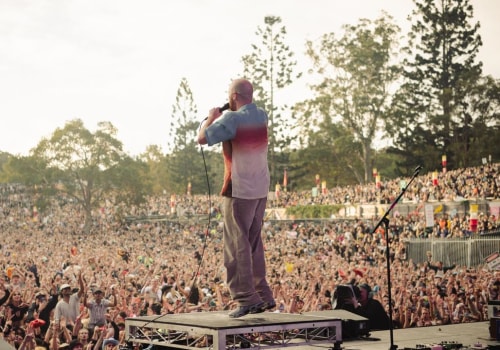
So it’s with some disappointment that Zonoscope’s next track, ‘Take Me Over’, follows that established formula of leaving a bar of vocal silence before launching into a chorus that’ll sound most at home sung by thousands-strong audiences. There's the familiar echoes of swooning “oohs” that colour the song’s backdrop; the same they worked throughout In Ghost Colours, so much so that they’ve become something of an integral part of the band’s sound. The song’s familiarity – its sheer Cut Copy-ness – acts as a buffer between the system-shock of the opener, and the blatant pop of ‘Where I’m Going’, which was first released for free via the band’s website in late 2010. The latter track’s mood is ebullient, contagious; it’s difficult to shake the image of the band members yelling “Yeah! Yeah! Yeah! Woo!” while fist-pumping at their triumphant Parklife 2010 headline spot.

‘Pharaohs & Pyramids’ doesn’t take a particularly Egyptian bent, besides singer Dan Whitford’s assurance that the nameless female protagonist is “rising from the pyramid”, and that “she’ll take you where the pharaohs live”. There’s a few layers of ascending synth sounds bouncing away in the background; shades of the first few tracks from The Knife’s excellent Silent Shout. It all reaches a pretty crescendo three-point-five minutes in, with the refrain of “Nobody here is breaking hearts” set atop frantically-jabbed keyboards. Tim Hoey’s guitar tone and phrasing in the song’s outro is eerily similar to what we heard as In Ghost Colours mega-hit ‘Hearts On Fire’ faded out. A pleasant combination, sure, but slightly troubling; there’s danger in regurgitating your own musical ideas. Zonoscope, in whole, demonstrates that Cut Copy’s collective brain is brimming with new ideas, new concepts; so, why return to the tried-and-true, as Hoey has done with the outro guitar tone here? It doesn’t make sense.

I was freaked out when I first heard a live performance of ‘Blink And You’ll Miss A Revolution’ last year. The effect is much the same upon hearing the recorded version. Its hook is a creepy keyboard phrase that sounds alien; so out-of-place in a Cut Copy song. Whitford’s lyrics are at an all-time cheesy high (“Have you heard the latest reinvention in the street? / Take me on a journey with the rhythm in my feet”), though the multiple layers of swooning vocals in the chorus fare better. These oddities are topped with a sampled string section in the outro; the outcome is the strangest song that they’ve put to record, by far.

‘Strange Nostalgia For The Future’ is the album’s midpoint, and only between-track segue; by comparison, In Ghost Colours had four. I’m glad they’ve seen the value in retaining these instrumental interludes, as they act as pleasant buffers amid the myriad new ideas contained on Zonoscope. Despite the 'Making Of' footage showing band members crouched in front of screaming amplifiers, the electric guitar is relatively scarce in the mix. So far there’s been no equivalent of ‘So Haunted’, a Ghost Colours track inspired by shoegaze-style guitar tones. There are layers of these sounds within ‘This Is All We’ve Got’, but they’re fleeting. I pay proper attention to drummer Mitchell Scott for the first time, due to the slightly irritating insistence of his snare drum. A galaxy of electronica twinkles excitedly in the background, but...this is the album’s least memorable song thus far.

The dainty keyboard riff at the beginning of ‘Alisa’ is at odds with the rest of the track, which soon reveals itself as Zonoscope’s heaviest song. Led by Ben Browning’s turn-around bassline and swathes of needling guitar lines – thank fuck, Hoey’s finally putting his six-string to use! – the track’s chorus simply consists of impassioned yells. Who Alisa is, or what she’s done to elicit such scorn isn’t clear. They sound more rock band than synthpop group here, especially as the track comes to a close via Hoey’s maxed-out distortion. It’s the album’s best track so far. There’s a line in ‘Hanging Onto Every Heartbeat’ about Whitford’s desire to "substitute your business suit, I’ll trade you" that piques my curiosity, but the analogy isn’t followed up; the chorus describes celestial themes ("satellites in the sky", "watching stars meet", etc). Alongside the next track, ‘Corner Of The Sky’ they’re Zonoscope’s dullest songs, if only because the vocal and musical hooks aren’t compelling enough to stick.

Cut Copy pick up the slack on ‘Sun God’, the album’s stormy, 15 minute-long final track. Amid tribal drumming, the song starts with Whitford demanding that we give our love to him. Then, strangely, it escalates to “Are you gonna give me your love? Love won’t be enough”. Dude, make up your mind. Alright, so the lyrics are faff, but the instrumentation isn’t: elegant, yet hard-edged techno in sync with thunderous drumming. There’s an extended breakdown where Whitford emotes “You’ve got to live / You’ve got to die / So what’s the purpose / Of you and I?” over Hoey’s jagged chords. Around the six-minute mark, ‘Sun God’ morphs into a second suite, where vocals are forgotten in favour of a full-scale electronic attack, the likes of which we’ve never heard from the band before. The overall effect is immersive to the point where you’ve forgotten about all the so-so sections and questionable ideas heard earlier in Zonoscope. In effect, ‘Sun God’ is a bit like those memory erasers carried by Will Smith and Tommy Lee-Jones in Men In Black: in the moment, what you hear is so god-damned good that you can’t wait to hear it again. It’s the first must-hear track of 2011, and while the rest of Zonoscope can’t be recommended with the same fervour, the album is certainly worthy of your attention. If not its predecessor

Andrew McMillen